As is well known, the fundamental law of the mechanics of Galilei-Newton, which is known as the law of inertia, can be stated thus: A body removed sufficiently far from other bodies continues in a state of rest or of uniform motion in a straight line.
This law not only says something about the motion of the bodies, but it also indicates the reference-bodies or systems of coordinates, permissible in mechanics, which can be used in mechanical description. The visible fixed stars are bodies for which the law of inertia certainly holds to a high degree of approximation. Now if we use a system of co-ordinates which is rigidly attached to the earth, then, relative to this system, every fixed star describes a circle of immense radius in the course of an astronomical day, a result which is opposed to the statement of the law of inertia. So that if we adhere to this law we must refer these motions only to systems of coordinates relative to
which the fixed stars do not move in a circle. A system of co-ordinates of which the state of motion is such that the law of inertia holds relative to it is called a ” Galileian system of co-ordinates.” The laws of the mechanics of Galflei-Newton can be regarded as valid only for a Galileian system of co-ordinates.
The purpose of mechanics is to describe how bodies change their position in space with “time.” I should load my conscience with grave sins against the sacred spirit of lucidity were I to formulate the aims of mechanics in this way, without serious reflection and detailed explanations.
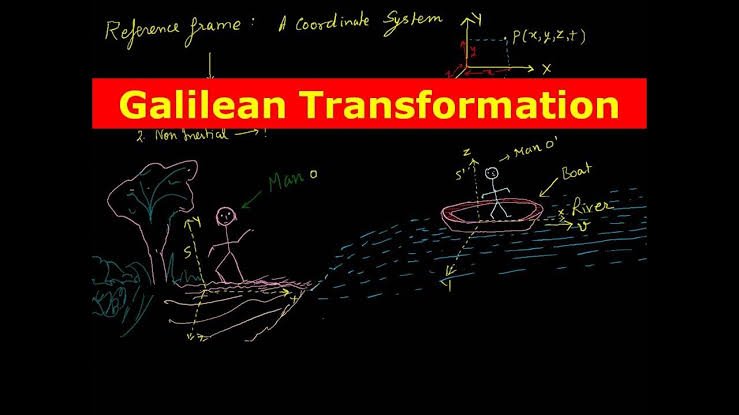
Let us proceed to disclose these sins.It is not clear what is to be understood here by “position” and “space.” I stand at the window of a railway carriage which is travelling uniformly, and drop a stone on the embankment, without throwing it. Then, disregarding the influence of the air resistance, I see the stone descend in a straight line. A pedestrian who observes the misdeed from the footpath notices that the stone falls to earth in a parabolic curve. I now ask: Do the “positions” traversed by the stone lie “in reality” on a straight line or on a parabola? Moreover, what is meant here by motion “in space” ? From the considerations of the previous section the answer is self-evident. In the first place we entirely shun the vague word “space,” of which, we must honestly acknowledge, we cannot form the slightest conception, and we replace it by “motion relative to a practically rigid body of reference.” The positions relative to the body of reference (railway carriage or embankment) have already been defined in detail in the preceding section. If instead of ” body of reference ” we insert ” system of co-ordinates,” which is a useful idea for mathematical description, we are in a position to say : The stone traverses a straight line relative to a system of co-ordinates rigidly attached to the carriage, but relative to a system of co-ordinates rigidly attached to the ground (embankment) it describes a parabola. With the aid of this example it is clearly seen that there is no such thing as an independently existing trajectory (lit. “path-curve” 1)), but only a trajectory relative to a particular body of reference.In order to have a complete description of the motion, we must specify how the body alters its position with time ; i.e. for every point on the trajectory it must be stated at what time the body is situated there. These data must be supplemented by such a definition of time that, in virtue of this definition, these time-values can be regarded essentially as magnitudes (results of measurements) capable of observation. If we take our stand on the ground of classical mechanics, we can satisfy this requirement for our illustration in the following manner.
We imagine two clocks of identical construction ; the man at the railway-carriage window is holding one of them, and the man on the footpath the other. Each of the observers determines the position on his own reference-body occupied by the stone at each tick of the clock he is holding in his hand. In this connection we have not taken account of the inaccuracy involved by the finiteness of the velocity of propagation of light. With this and with a second difficulty prevailing here we shall have to deal in detail later.
On the basis of the physical interpretation of distance which has been indicated, we are also in a position to establish the distance between two points on a rigid body by means of measurements. For this purpose we require a ” distance ” (rod S) which is to be used once and for all, and which we employ as a standard measure. If, now, A and B are two points on a rigid body, we can construct the line joining them according to the rules of geometry ; then, starting from A, we can mark off the distance S time after time until we reach B. The number of these operations required is the numerical measure of the distance AB. This is the basis of all measurement of length. 1)
Every description of the scene of an event or of the position of an object in space is based on the specification of the point on a rigid body (body of reference) with which that event or object coincides. This applies not only to scientific description, but also to everyday life. If I analyse the place specification ” Times Square, New York,” [A] I arrive at the following result. The earth is the rigid body to which the specification of place refers; ” Times Square, New York,” is a well-defined point, to which a name has been assigned, and with which the event coincides in space.2)
This primitive method of place specification deals only with places on the surface of rigid bodies, and is dependent on the existence of points on this surface which are distinguishable from each other. But we can free ourselves from both of these limitations without altering the nature of our specification of position. If, for instance, a cloud is hovering over Times Square, then we can determine its position relative to the surface of the earth by erecting a pole perpendicularly on the Square, so that it reaches the cloud. The length of the pole measured with the standard measuring-rod, combined with the specification of the position of the foot of the pole, supplies us with a complete place specification. On the basis of this illustration, we are able to see the manner in which a refinement of the conception of position has been developed.
(a) We imagine the rigid body, to which the place specification is referred, supplemented in such a manner that the object whose position we require is reached by. the completed rigid body.
(b) In locating the position of the object, we make use of a number (here the length of the pole measured with the measuring-rod) instead of designated points of reference.
(c) We speak of the height of the cloud even when the pole which reaches the cloud has not been erected. By means of optical observations of the cloud from different positions on the ground, and taking into account the properties of the propagation of light, we determine the length of the pole we should have required in order to reach the cloud.
From this consideration we see that it will be advantageous if, in the description of position, it should be possible by means of numerical measures to make ourselves independent of the existence of marked positions (possessing names) on the rigid body of reference. In the physics of measurement this is attained by the application of the Cartesian system of co-ordinates.
This consists of three plane surfaces perpendicular to each other and rigidly attached to a rigid body. Referred to a system of co-ordinates, the scene of any event will be determined (for the main part) by the specification of the lengths of the three perpendiculars or co-ordinates (x, y, z) which can be dropped from the scene of the event to those three plane surfaces. The lengths of these three perpendiculars can be determined by a series of manipulations with rigid measuring-rods performed according to the rules and methods laid down by Euclidean geometry.
In practice, the rigid surfaces which constitute the system of co-ordinates are generally not available ; furthermore, the magnitudes of the co-ordinates are not actually determined by constructions with rigid rods, but by indirect means. If the results of physics and astronomy are to maintain their clearness, the physical meaning of specifications of position must always be sought in accordance with the above considerations. 3)
We thus obtain the following result: Every description of events in space involves the use of a rigid body to which such events have to be referred. The resulting relationship takes for granted that the laws of Euclidean geometry hold for “distances;” the “distance” being represented physically by means of the convention of two marks on a rigid body.
IN Your schooldays most of you who read this book made acquaintance with the noble building of Euclid’s geometry, and you remember — perhaps with more respect than love — the magnificent structure, on the lofty staircase of which you were chased about for uncounted hours by conscientious teachers. By reason of our past experience, you would certainly regard everyone with disdain who should pronounce even the most out-of-the-way proposition of this science to be untrue. But perhaps this feeling of proud certainty would leave you immediately if some one were to ask you: “What, then, do you mean by the assertion that these propositions are true?” Let us proceed to give this question a little consideration.
Geometry sets out form certain conceptions such as “plane,” “point,” and “straight line,” with which we are able to associate more or less definite ideas, and from certain simple propositions (axioms) which, in virtue of these ideas, we are inclined to accept as “true.” Then, on the basis of a logical process, the justification of which we feel ourselves compelled to admit, all remaining propositions are shown to follow from those axioms, i.e. they are proven. A proposition is then correct (“true”) when it has been derived in the recognised manner from the axioms. The question of “truth” of the individual geometrical propositions is thus reduced to one of the “truth” of the axioms. Now it has long been known that the last question is not only unanswerable by the methods of geometry, but that it is in itself entirely without meaning. We cannot ask whether it is true that only one straight line goes through two points. We can only say that Euclidean geometry deals with things called “straight lines,” to each of which is ascribed the property of being uniquely determined by two points situated on it. The concept “true” does not tally with the assertions of pure geometry, because by the word “true” we are eventually in the habit of designating always the correspondence with a “real” object; geometry, however, is not concerned with the relation of the ideas involved in it to objects of experience, but only with the logical connection of these ideas among themselves.
It is not difficult to understand why, in spite of this, we feel constrained to call the propositions of geometry “true.” Geometrical ideas correspond to more or less exact objects in nature, and these last are undoubtedly the exclusive cause of the genesis of those ideas. Geometry ought to refrain from such a course, in order to give to its structure the largest possible logical unity. The practice, for example, of seeing in a “distance” two marked positions on a practically rigid body is something which is lodged deeply in our habit of thought. We are accustomed further to regard three points as being situated on a straight line, if their apparent positions can be made to coincide for observation with one eye, under suitable choice of our place of observation.
If, in pursuance of our habit of thought, we now supplement the propositions of Euclidean geometry by the single proposition that two points on a practically rigid body always correspond to the same distance (line-interval), independently of any changes in position to which we may subject the body, the propositions of Euclidean geometry then resolve themselves into propositions on the possible relative position of practically rigid bodies.1) Geometry which has been supplemented in this way is then to be treated as a branch of physics. We can now legitimately ask as to the “truth” of geometrical propositions interpreted in this way, since we are justified in asking whether these propositions are satisfied for those real things we have associated with the geometrical ideas. In less exact terms we can express this by saying that by the “truth” of a geometrical proposition in this sense we understand its validity for a construction with rule and compasses.
Of course the conviction of the “truth” of geometrical propositions in this sense is founded exclusively on rather incomplete experience. For the present we shall assume the “truth” of the geometrical propositions, then at a later stage (in the general theory of relativity) we shall see that this “truth” is limited, and we shall consider the extent of its limitation.
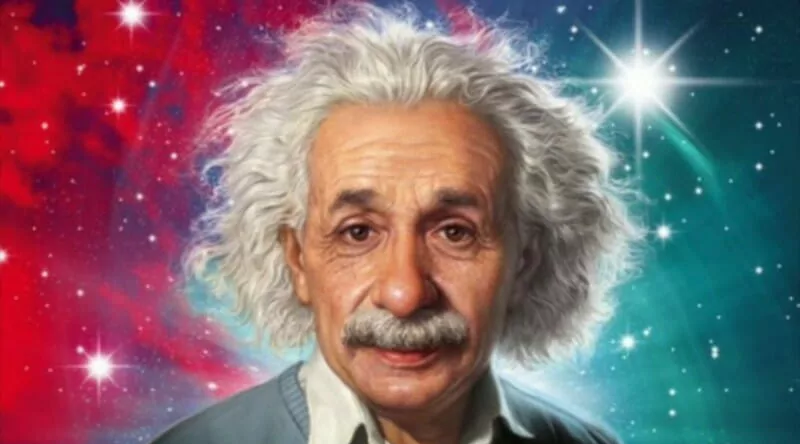
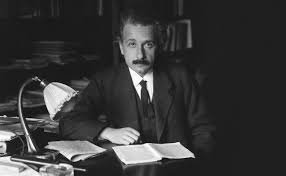
ALBERT EINSTEIN is the son of German- Jewish parents. He was born in 1879 in the town of Ulm, Würtemberg, Germany. His schooldays were spent in Munich, where he attended the Gymnasium until his sixteenth year. After leaving school at Munich, he accompanied his parents to Milan, whence he proceeded to Switzer- land six months later to continue his studies. From 1896 to 1900 Albert Einstein studied mathematics and physics at the Technical High School in Zurich, as he intended becoming a secondary school (Gymnasium) teacher. For some time afterwards he was a private tutor, and having meanwhile become naturalised, he obtained a post as engineer in the Swiss Patent Office in 1902, which position he occupied till 1909.
The main ideas involved in the most important of Einstein’s theories date back to this period. Amongst these may be mentioned: The Special Theory of Relativity, Inertia of Energy, Theory of the Brownian Movement, and the Quantum-Law of the Emission and Absorption of Light (1905). These were followed some years later by the Theory of the Specific Heat of Solid Bodies, and the fundamental idea of the General Theory of Relativity. During the interval 1909 to 1911 he occupied the post of Professor Extraordinarius at the University of Zurich, afterwards being appointed to the University of Prague, Bohemia, where he remained as Professor Ordinarius until 1912. In the latter year Professor Einstein accepted a similar chair at the Polytechnikum, Zurich, and continued his activities there until 1914, when he received a call to the Prussian Academy of Science, Berlin, as successor to Van’t Hoff. Professor Einstein is able to devote himself freely to his studies at the Berlin Academy, and it was here that he succeeded in completing his work on the General Theory of Relativity (1915– 17). Professor Einstein also lectures on various special branches of physics at the University of Berlin, and, in addition, he is Director of the Institute * for Physical Research of the Kaiser Wilhelm Gesellschaft. Professor Einstein has been twice married. His first wife, whom he married at Berne in 1903, was a fellow-student from Serbia. There were two sons of this marriage, both of whom are liv- ing in Zurich, the elder being sixteen years of age. Recently Professor Einstein married a widowed cousin, with whom he is now living in Berlin.
A compelling new theory claims to solve all six in a single sweep. The answer, according to a paper published in European Physical Journal C by Herb Fried from Brown University and Yves Gabellini from INLN-Université de Nice, may be a kind of particle called a tachyon.
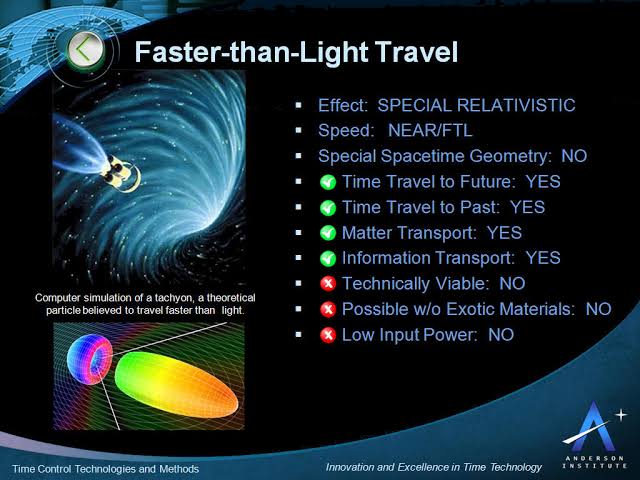
Tachyons are hypothetical particles that travel faster than light. According to Einstein’s special theory of relativity – and according to experiment so far – in our ‘real’ world, particles can never travel faster than light. Which is just as well: if they did, our ideas about cause and effect would be thrown out the window, because it would be possible to see an effect manifest before its cause.
Although it is elegantly simple in conception, Fried and Gabellini’s model is controversial because it requires the existence of these tachyons: specifically electrically charged, fermionic tachyons and anti-tachyons, fluctuating as virtual particles in the quantum vacuum (QV). (The idea of virtual particles per se is nothing new: in the Standard Model, forces like electromagnetism are regarded as fields of virtual particles constantly ducking in and out of existence. Taken together, all these virtual particles make up the quantum vacuum.)
But special relativity, though it bars faster-than-light travel for ordinary matter and photons, does not entirely preclude the existence of tachyons. As Fried explains, “In the presence of a huge-energy event, such as a supernova explosion or the Big Bang itself, perhaps these virtual tachyons can be torn out of the QV and sent flying into the real vacuum (RV) of our everyday world, as real particles that have yet to be measured.”
If these tachyons do cross the speed-of-light boundary, the researchers believe that their high masses and small distances of interaction would introduce into our world an immeasurably small amount of ‘a-causality’.
Fried and Gabellini arrived at their tachyon-based model while trying to find an explanation for the dark energy throughout space that appears to fuel the accelerating expansion of the universe. They first proposed that dark energy is produced by fluctuations of virtual pairs of electrons and positrons.
However, this model ran into mathematical difficulties with unexpected imaginary numbers. In special relativity, however, the rest mass of a tachyon is an imaginary number, unlike the rest mass of ordinary particles. While the equations and imaginary numbers in the new model involve far more than simple masses, the idea is suggestive: Gabellini realized that by including fluctuating pairs of tachyons and anti-tachyons he and Fried could cancel and remove the unwanted imaginary numbers from their calculations. What is more, a huge bonus followed from this creative response to mathematical necessity: Gabellini and Fried realized that by adding their tachyons to the model, they could explain inflation too.
“This assumption [of fluctuating tachyon-anti-tachyon pairs] cannot be negated by any experimental test,” says Fried – and the model fits beautifully with existing experimental data on dark energy and inflation energy.
Of course, both Fried and Gabellini recognize that many physicists are wary of theories based on such radical assumptions.
But, taken as a whole, their model suggests the possibility of a unifying mechanism that gives rise not only to inflation and dark energy, but also to dark matter. Calculations suggest that these high-energy tachyons would re-absorb almost all of the photons they emit and hence be invisible.
And there is more: as Fried explains, “If a very high-energy tachyon flung into the real vacuum (RV) were then to meet and annihilate with an anti-tachyon of the same species, this tiny quantum ‘explosion’ of energy could be the seed of another Big Bang, giving rise to a new universe. That ‘seed’ would be an energy density, at that spot of annihilation, which is so great that a ‘tear’ occurs in the surface separating the Quantum Vacuum from the RV, and the huge energies stored in the QV are able to blast their way into the RV, producing the Big Bang of a new universe. And over the course of multiple eons, this situation could happen multiple times.”
This model – like any model of such non-replicable phenomena as the creation of the universe – may be simply characterized as a tantalizing set of speculations. Nevertheless, it not only fits with data on inflation and dark energy, but also offers a possible solution to yet another observed mystery.
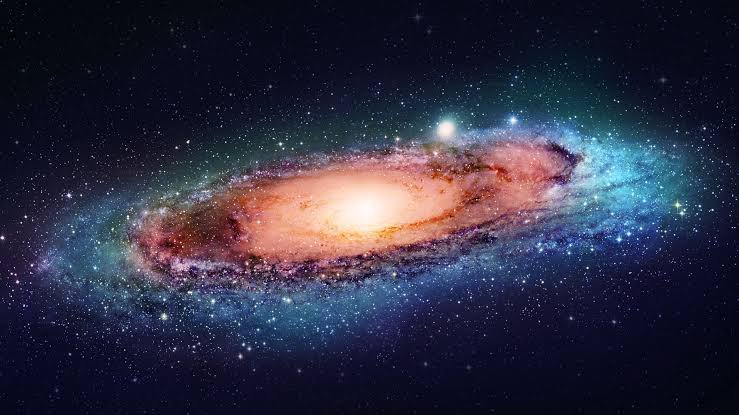
Within the last few years, astronomers have realized that the black hole at the centre of our Milky Way galaxy is ‘supermassive’, containing the mass of a million or more suns. And the same sort of supermassive black hole (SMBH) may be seen at the centres of many other galaxies in our current universe.
Exactly how such objects form is still an open question. The energy stored in the QV is normally large enough to counteract the gravitational tendency of galaxies to collapse in on themselves. In the theory of Fried and Gabellini, however, when a new universe forms, a huge amount of the QV energy from the old universe escapes through the ‘tear’ made by the tachyon-anti-tachyon annihilation (the new Big Bang). Eventually, even faraway parts of the old universe will be affected, as the old universe’s QV energy leaks into the new universe like air escaping through a hole in a balloon. The decrease in this QV-energy buffer against gravity in the old universe suggests that as the old universe dies, many of its galaxies will form SMBHs in the new universe, each containing the mass of the old galaxy’s former suns and planets. Some of these new SMBHs may form the centres of new galaxies in the new universe.
“This may not be a very pleasant picture,” says Fried, speaking of the possible fate of our own universe. “But it is at least scientifically consistent.”
And in the weird, untestable world of Big Bangs and multiple universes, consistency may be the best we can hope for.
Time is passing non-stop, and we follow it with clocks and calendars. Yet we cannot study it with a microscope or experiment with it. And it still keeps passing. We just cannot say what exactly happens when time passes.
Time is represented through change, such as the circular motion of the moon around Earth. The passing of time is indeed closely connected to the concept of space.
According to the general theory of relativity, space, or the universe, emerged in the Big Bang some 13.7 billion years ago. Before that, all matter was packed into an extremely tiny dot. That dot also contained the matter that later came to be the sun, the earth and the moon -- the heavenly bodies that tell us about the passing of time.
Before the Big Bang, there was no space or time.
"In the theory of relativity, the concept of time begins with the Big Bang the same way as parallels of latitude begin at the North Pole. You cannot go further north than the North Pole," says Kari Enqvist, Professor of Cosmology.
One of the most peculiar qualities of time is the fact that it is measured by motion and it also becomes evident through motion.
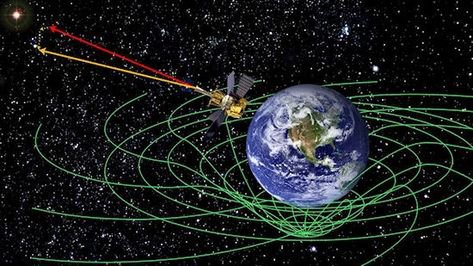
According to the general theory of relativity, the development of space may result in the collapse of the universe. All matter would shrink into a tiny dot again, which would end the concept of time as we know it.
"Latest observations, however, do not support the idea of collapse, rather inter-galactic distances grow at a rapid pace," Enqvist says.



 physicsbaji.science.blog
You must be logged in to post a comment.